
Banber Erevani hamalsarani. Banasirut'yun.
| E - ISSN | : | 2738-2575 |
| P - ISSN | : | 1829-457X |

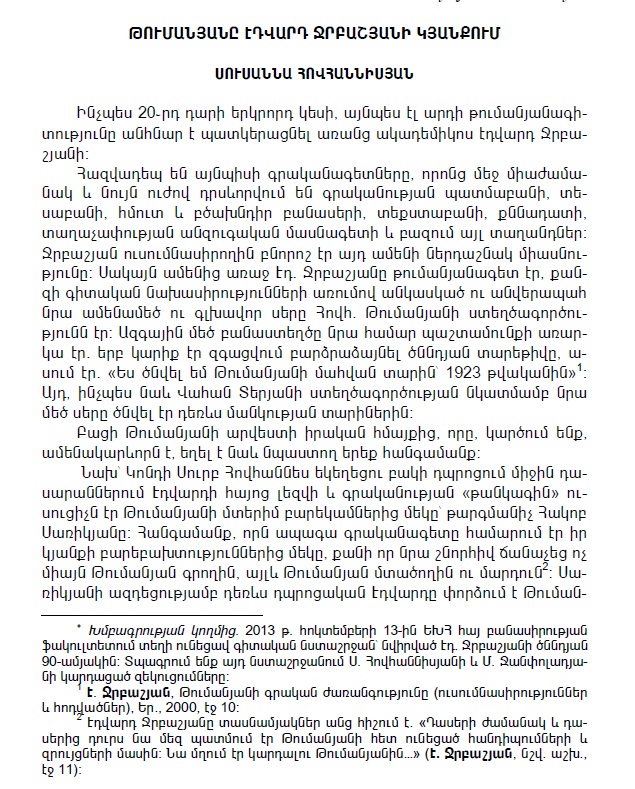
Հոդվածում լուսաբանված և արժևորված են ակադ. Էդ. Ջրբաշյանի այն աշխատությունները, որոնցում քննվում են հայ գրականության հարցերը գրական ազդեցությունների և կապերի համատեքստում: Այդ հարցերը միշտ եղել են գիտնականի սևեռուն ուշադրության կենտրոնում: Նշված խնդիրներին նվիրված բազմաթիվ գործեից առանձնացված և վերլուծված են մի քանի հոդվածներ, ինչպես նաև «Պուշկինը և հայ բանաստեղծները» մենագրությունը: Էդ Ջրբաշյանի աշխատանքները թե՛ ամենատարբեր խնդիրների հարցադրումով, թե՛ փաստական հարուստ նյութի հիման վրա դրանց բազմակողմանի բացահայտումներով, թե՛ եզրակացությունների հիմնավորությամբ ակնհայտորեն վկայում են հայ գրականագիտության մեջ գրական կապերի և ազդեցությունների ուսումնասիրման ասպարեզում գիտնականի ներդրած ծանրակշիռ ավանդի մասին:
George Vardapet Meghrik (Sevantsi, Drazarktsi) is a little-known but extraordinary Armenian spiritual leader of XI-XII centuries, a monk-hermit, teacher, translator, writer, reformer of the church, who was called Meghr or Meghrik (“honey” in Armenian) by his contemporaries because of his sweet language and good character. According to various sources, he was born in 1043 /45 in the village Analyur of Vaspurakan region in the territory of Greater Armenia. At the age of twenty he decided to become a monk and entered the Monastery of Sevan. At the end of XI century he moved into Cilicia, becoming the colleague and the favourite of the Catholicos Gregory II Vkayaser who insisted that he settled in Parlah, after that in the Red Monastery Shughr, which was the throne of the Catholicos in the years 1105-1116. He spent the last years of his life in the Monastery of Drazark, which he turned into a temple complex and there he wrote the Lawbook of Drazark’s monastery. He spent the last years of his life in the Monastery of Drazark, which he turned into a temple complex and there he wrote the Lawbook of Drazark’s monastery. Due to his efforts, Drazark became an educational and cultural center in Armenia. From his little heritage only
a few works have been preserved – a few prayers, songs, among which the most valuable ones are “The Book of Prayers” and “Words of Confessions” written in refined Grabar. We have restored the text of the prayer «Words of Confessions» on the basis of two manuscripts of Matenadaran, one of which is the oldest – written in 1297, № 640 and the second– № 2607, a more holistic one although written later.
The aim of the article is to study of one of the forms of subordinative compounds, i.e. compounds (synthetic constructions) syntactically characterized as attributive compounds (with the syntactic connection of “defining-defined”). The aim of the article is to reveal the differences and similarities of these compounds in both languages, analyze the components from morphological-categorial (to which part of speech they belong) point of view and of the syntactic connection between the components. Besides, the semantic fields of the first components of the compounds of this type are also studied. The observed peculiarities have great importance for the structural and typological characteristics of the languages being studied.
The article introduces the means of expressing imperation and inducement in English as well as the possibilities of their differentiation, similarities and semantic divergences. Some characteristic definitions are also presented, due to which it becomes possible to distinguish imperative and inductive sentences distinctly.