
YSU Journals system.
Journals
-
Proceedings of the YSU A: Physical and Mathematical Sciences
Proceedings of the YSU A: Physical and Mathematical Sciences aims to publish original research papers and survey articles in all areas of physics, mathematics and informatics. Proc. YSU A: Phys. Math. Sci. accepts also review articles, short communications, conference proceedings, algorithms, Ph.D and doctoral thesis’s and other items with a detailed exposition of results, proofs, experiments and examples. One of purposes is to reflect the progress of the research in all areas of physics, mathematics and informatics in Armenia and, by providing an international forum, to stimulate its further developments.
-

Proceedings of the YSU B: Chemical and Biological Sciences
Proceedings of the YSU B: Chemical and Biological Sciences aims to publish original research papers and survey articles in all areas of chemistry and biology. Proc. YSU B: Chem. Biol. Sci. accepts also review articles, short communications, conference proceedings, Ph.D and doctoral thesis’s and other items with a detailed exposition of results, experiments and examples. One of purposes is to reflect the progress of the research in all areas of chemistry and biology in Armenia and, by providing an international forum, to stimulate its further developments.
-
Proceedings of the YSU C: Geological and Geographical Sciences
Proceedings of the YSU C: Geological and Geographical Sciences aims to publish original research papers and survey articles in all areas of geology and geography. Proc. YSU C: Geol. Geogr. Sci. accepts also review articles, short communications, conference proceedings, Ph.D and doctoral thesis's and other items with a detailed exposition of results, experiments and examples. One of purposes is to reflect the progress of the research in all areas of geology and geography in Armenia and, by providing an international forum, to stimulate its further developments.
-

Journal of Innovative Solutions for Eco-Environmental Sustainability
Journal of Innovative Solutions for Eco-Environmental Sustainability is dedicated to publishing high-quality, cutting-edge research and comprehensive reviews that address pressing challenges in environmental sustainability through innovative, interdisciplinary approaches. The Journal of Innovative Solutions for Eco-Environmental Sustainability is a double-blind peer-reviewed scientific journal published by the Faculty of Biology of Yerevan State University quarterly (4 issues per year). It presents original research, review, short communication articles of high standards in all areas of innovative solutions for management of ecology and environment for sustainable future.
-
Bulletin of Yerevan University B: Philology
The "Bulletin of Yerevan University. Philology" publishes scientific articles and studies related to the problems of armenian studies, philology, linguistics and journalism. The journal accepts original articles and comprehensive studies not previously published. Specialists from YSU and other institutions of RA, as well as Diaspora and abroad, are published in “Banber”.
-
Bulletin of Yerevan University C: Jurisprudence
Articles of current interest on various issues of jurisprudence are published in the Journal. As a rule, these are the results of the research aimed to the improvement of RA legislation. The purpose of the journal is to contribute to the improvement and development of RA legislation. The Editorial Board of the journal always looks into widening the range of the authors, inviting the researchers from universities all around the world.
-
Bulletin of Yerevan University E: Philosophy, Psychology
The thematic fields of the journal are the current issues of logic, anthropology, ethics, aesthetics, theory and history of Armenian and world philosophy. Among the thematic fields are also the current issues of history and theory of psychology, personality and clinical psychology, as well as methodology and methodics of philosophical and psychological research. The editorial board tries to expand the circle of authors inviting researchers from different universities of the world.
-
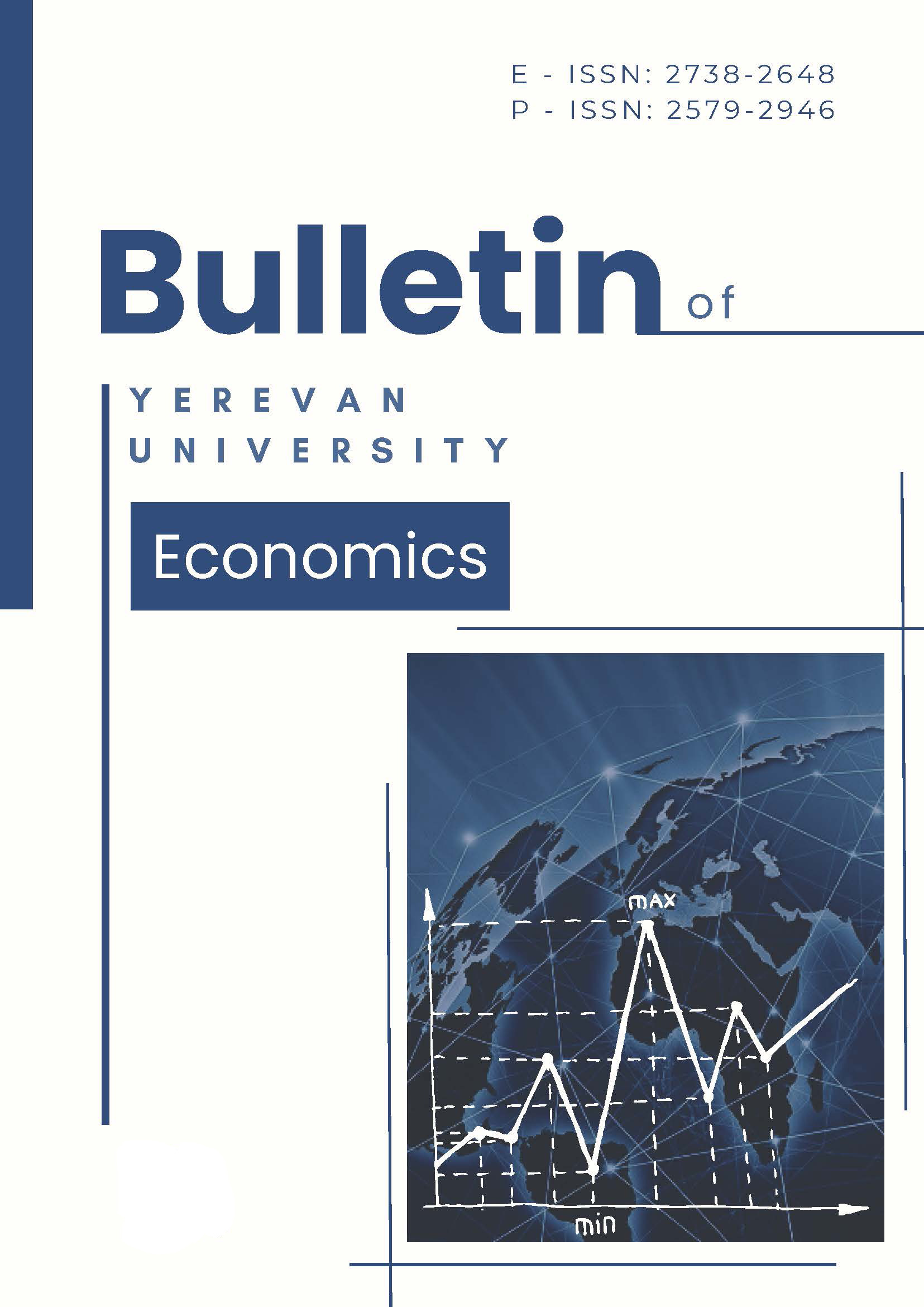
Bulletin of Yerevan University G: Economics
The journal publishes scientific articles and studies in all fields of economics and welcomes submissions whether they be theoretical, applied, or orientated towards academics or policymakers. The journal accepts original articles and comprehensive studies not previously published. The Editorial Board of the journal always looks into widening the range of the authors, inviting the researchers from universities all around the world.
-
Bulletin of Yerevan University H: Russian Philology
The "Bulletin of Yerevan University. Russian Philology " is a scientific periodical devoted to a wide range of problems of Russian literature and the Russian language. The journal publishes previously unreleased studies on the theory and history of the Russian language and literature, Russian-Armenian and Russian-foreign language linguistic and literary contacts, comparative and typological study of languages and literatures, on translation problems, as well as the problems of the theoretical linguistics and literary theory.
-
Journal of Sociology: Bulletin of Yerevan University
The journal publishes papers on sociological and interdisciplinary analysis of actual problems of the modern society, without limiting its scope of interests with any particular direction. We are interested in both theoretical and applied research studies focused on contemporary issues in the field of social work and social administration.
-

YSU Journal of International Affairs
The YSU Journal of International Affairs (YSUJIA) is a peer-reviewed academic journal fostering debate and dialogue on international affairs across humanities and social sciences, including international relations, international history, international law, international political economy, diplomacy, and foreign policies. It aims to link scholars and policymakers while encouraging innovative, interdisciplinary contributions that broaden the scope of current scholarship.
-
Armenian Folia Anglistika
Armenian Folia Anglistika is the official peer-reviewed academic journal of the Armenian Association for the Study of English (established in 2005) and Yerevan State University (affiliated since 2015). Its primary objective is to provide a platform for the dissemination of original research and critical thought in the fields of English Language and Linguistics, Literature, Methodology, Culture, Translation Studies, and Gender Studies, fostering academic dialogue and collaboration among scholars, researchers, and educators within Armenia and across the global scholarly community.
In 2007, the Editorial Board of Armenian Folia Anglistika inaugurated a new section entitled Armenological Studies, designed to encourage valuable and innovative research in the areas of Armenian Linguistics, Literature, Ethnic Studies, History, Cultural History, and Genocide Studies. This section aims to promote interdisciplinary dialogue and contribute to a deeper understanding of Armenia’s cultural and intellectual heritage within a global academic context.
The journal is published twice a year and welcomes original scholarly articles. Submissions are reviewed by a multi-national Editorial Board, which is committed to maintaining high academic standards and fostering international collaboration in the humanities.
-
Journal of Political Science: Bulletin of Yerevan University
The Journal of Political Science: Bulletin of Yerevan University is a peer-reviewed journal that publishes original results of fundamental and applied research of theoretical and practical significance in the field of political science, informing the domestic, regional and international political science community about the latest results of political science research. Manuscripts in all areas and methodologies of political research are welcome for consideration. The Journal is open to comparative research and especially welcomes those manuscripts that are based on interdisciplinary approaches to political science issues. The Journal of Political Science: Bulletin of Yerevan University is a public platform for the consolidation and structuring of the Armenian and regional political science network, ensuring the integration of Armenian and regional political science into international political science, contributing to the development of university political science education in Armenia and the region.
-
Translation Studies: Theory and Practice
The Translation Studies: Theory and Practice (TSTP) is a double-blind peer-reviewed scientific journal published by the Department of Translation Studies of Yerevan State University. It presents original research articles of high standards in all areas of translation. The journal appears in two issues per annum. Papers submitted to the journal should be written in English. The journal is available both in print and online.
-
Modern Psychology
Scientific Bulletin "Modern Psychology" is an academic journal of the Faculty of Philosophy and Psychology of Yerevan State University. The bulletin aims to promote research in the study of psychological science, focusing on the main pillars of the field of psychology and interdisciplinary sciences.
-
Foreign Languages in Higher Education
“Foreign Languages in Higher Education” is an open-access, blind peer-reviewed journal for research in the broad areas of linguistics and foreign literature, as well as methods of teaching foreign languages published by Yerevan State University (Armenia). It welcomes contributions from all subdisciplines of linguistics (theoretical and applied) and literary studies (literary theory and literary criticism). It also provides a forum for cross-linguistic/cross-cultural and interdisciplinary research in the areas of linguistics, literature, cultural studies, and multimodal communication, as well as foreign language teaching methodology. For information about the manuscript format and the review process, please go to section For Authors.
-
State and Law
The Journal “State and Law” is a peer-reviewed scientific journal dedicated to publishing high-quality research in legal theory and practice, comparative law, constitutional studies, and public governance. With a strong focus on both Armenian and international legal developments, the journal seeks to foster scholarly dialogue across diverse legal systems and traditions. In addition to traditional legal scholarship, The Journal “State and Law” also welcomes interdisciplinary contributions that offer novel insights into the law and its broader societal implications.
-

History and Culture
The articles cover diverse issues on Armenian and world history, archaeology and ethnography, art, culture, as well as on Armenian diaspora. Hence, the corresponding sections of History, Archaeology and Ethnography, Art and Culture, Diaspora Studies. The journal also includes reviews and materials about the merited scholars. There are pages commemorating and appraising the work of those who passed away.
The journal is released twice a year.
-

Armenological Issues
“Armenological Issues” is the bulletin of the Institute for Armenian Studies of YSU. It has been published since 2014, in Yerevan. Various research materials on Armenian studies are published in this bulletin. Many prominent scholars from RA, Armenian Diaspora and abroad collaborate with this bulletin. The bulletin is published thrice a year. It has the following sections: “Articles”, “Publications”, “Book Reviews”, “Academic Life”. The materials are reviewed and edited. Those articles, which do not match the criteria, won’t be published in the bulletin.
-
EDUCATION IN THE 21ST CENTURY
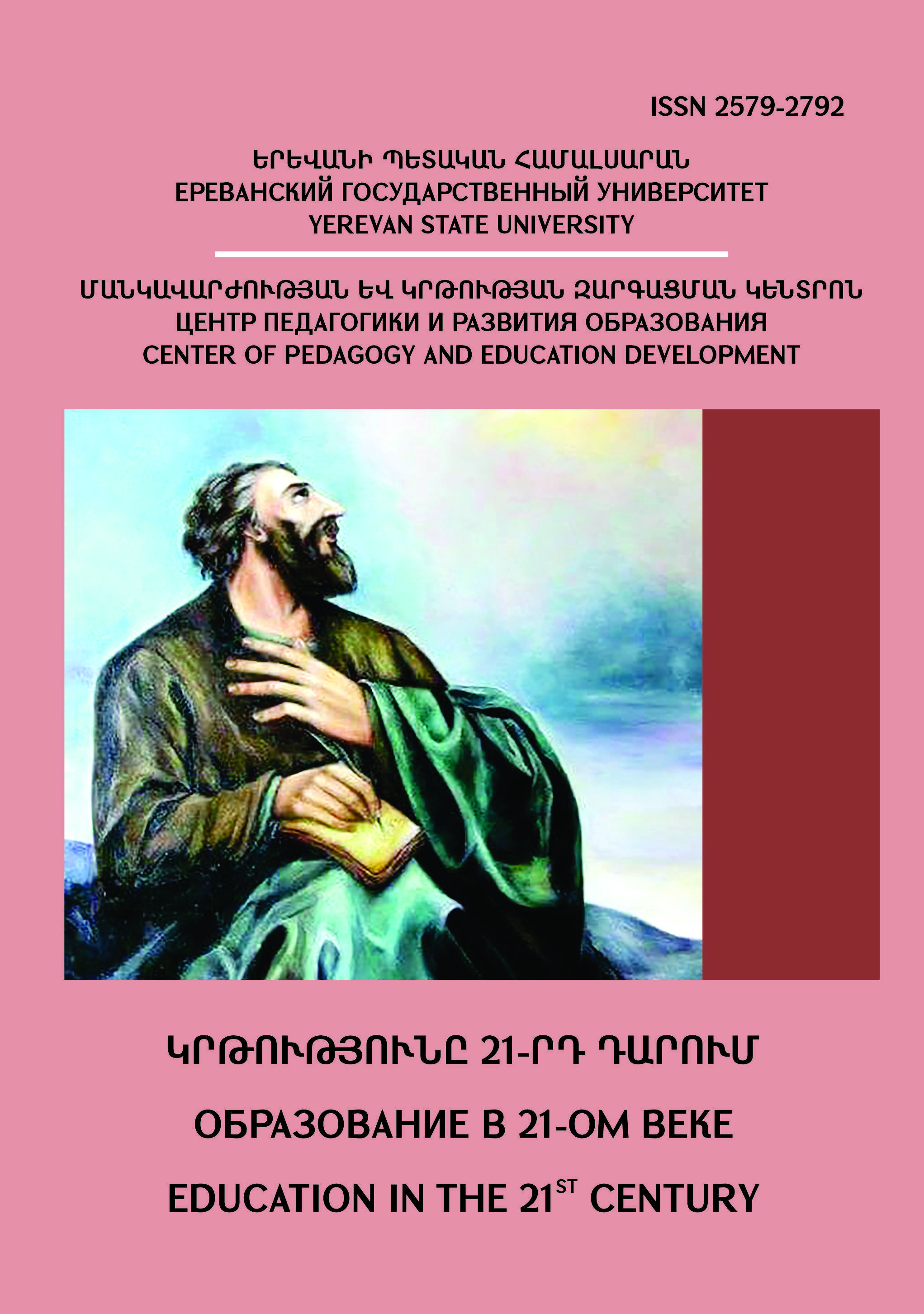
The international bilingual peer-reviewed scientific-methodological journal Education in the 21st Century has been published by Yerevan State University (YSU) since 2019. The journal's editorial and academic operations are managed by the YSU Pedagogy and Education Development Center. Issued biannually, the journal complies with international standards of publication ethics and rigorous peer review. The international editorial board consists of affiliated researchers and experts from domestic and foreign academic institutions. The journal serves as an academic forum for examining contemporary educational issues, disseminating research findings, and analyzing pedagogical models.
On the cover of this edition is the image of Mesrop Mashtots - an outstanding Armenian scientist-educator, the creator of Armenian Alphabet and the founder of the Armenian pedagogical tradition.
-
Foreign Languages for Special Purposes
FLSP international journal is a collection of scientific articles presented by FLSP practitioners inside and out Armenia targeting at professional experience exchange and concurrent development of FLSP methodologies.
-
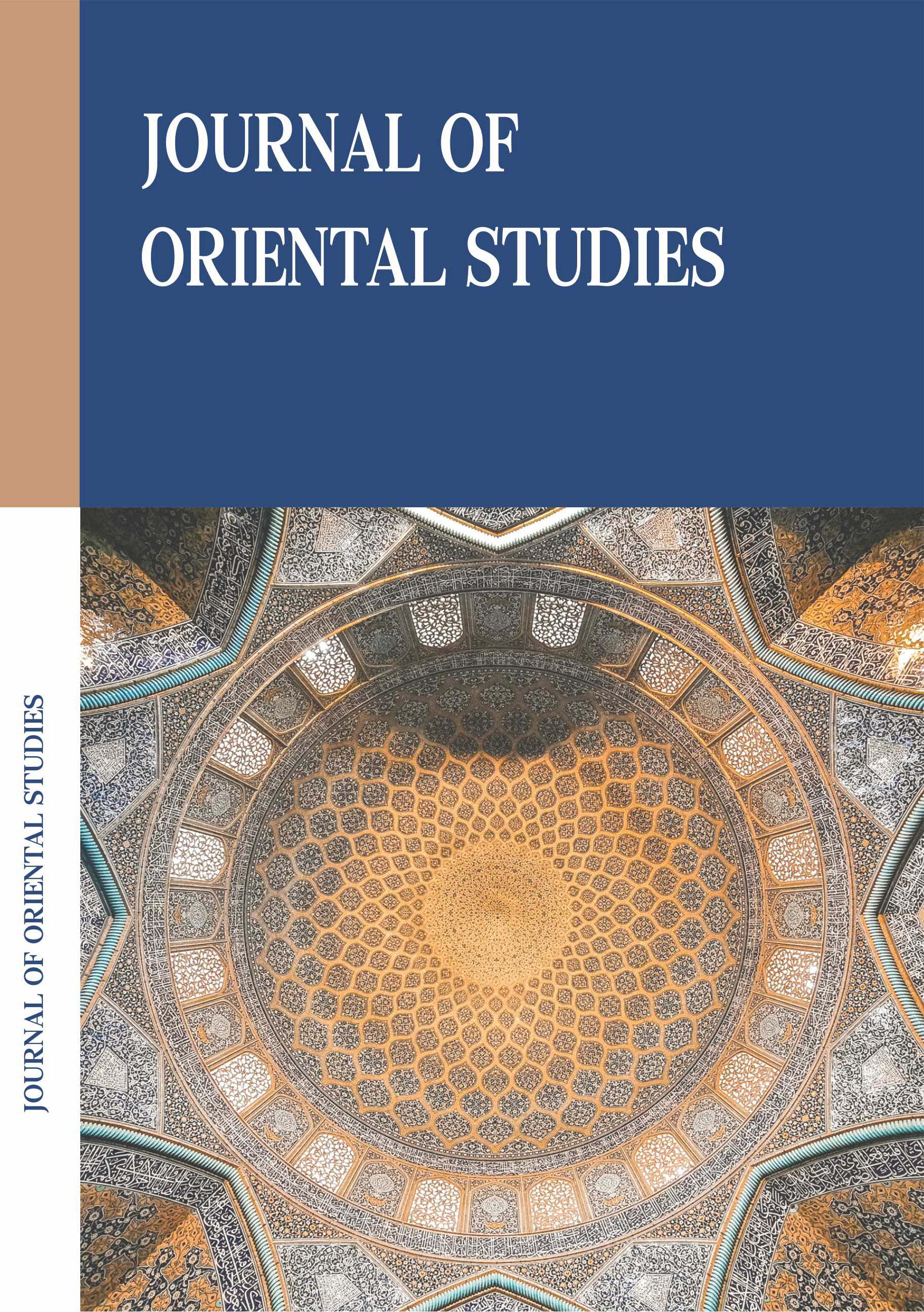
Journal of Oriental Studies
Journal of Oriental Studies has been published since 2006.
Journal is the successor of the "Problems of Oriental Studies", proceedings of the interuniversity scholarly articles and "Oriental Collection" (2004) published by the Ministry of Higher and Vocational Secondary Education of the Armenian SSR (1983-2004).
JOS is an interdisciplinary and interregional academic journal edited by the Faculty of Oriental Studies of YSU.
-
Journal of Iranian Linguistics
The Journal of Iranian Linguistics (JIL) is a platform uniting scholars worldwide to explore Iranian linguistic diversity. With a commitment to interdisciplinary discourse, JIL covers syntax, morphology, phonology, phonetics, semantics, sociolinguistics, language policy, and language acquisition. The user-friendly website, part of Yerevan State University's journal system, ensures easy access to high-quality, diverse research. Join us in propelling Iranian linguistics to new heights!
-
Historia: Philosophy & Theory
Historia: Philosophy & Theory is a double-blind peer-reviewed biannual international academic electronic journal of the Laboratory for Philosophy and Theory of History based in Yerevan State University, Armenia. The journal is published twice a year, in June and December. The journal aims to comprehensively address philosophical matters pertaining to the disciplines of history and historiography, while concurrently delving into theoretical concerns associated with historical narratives, that of national and beyond.
-
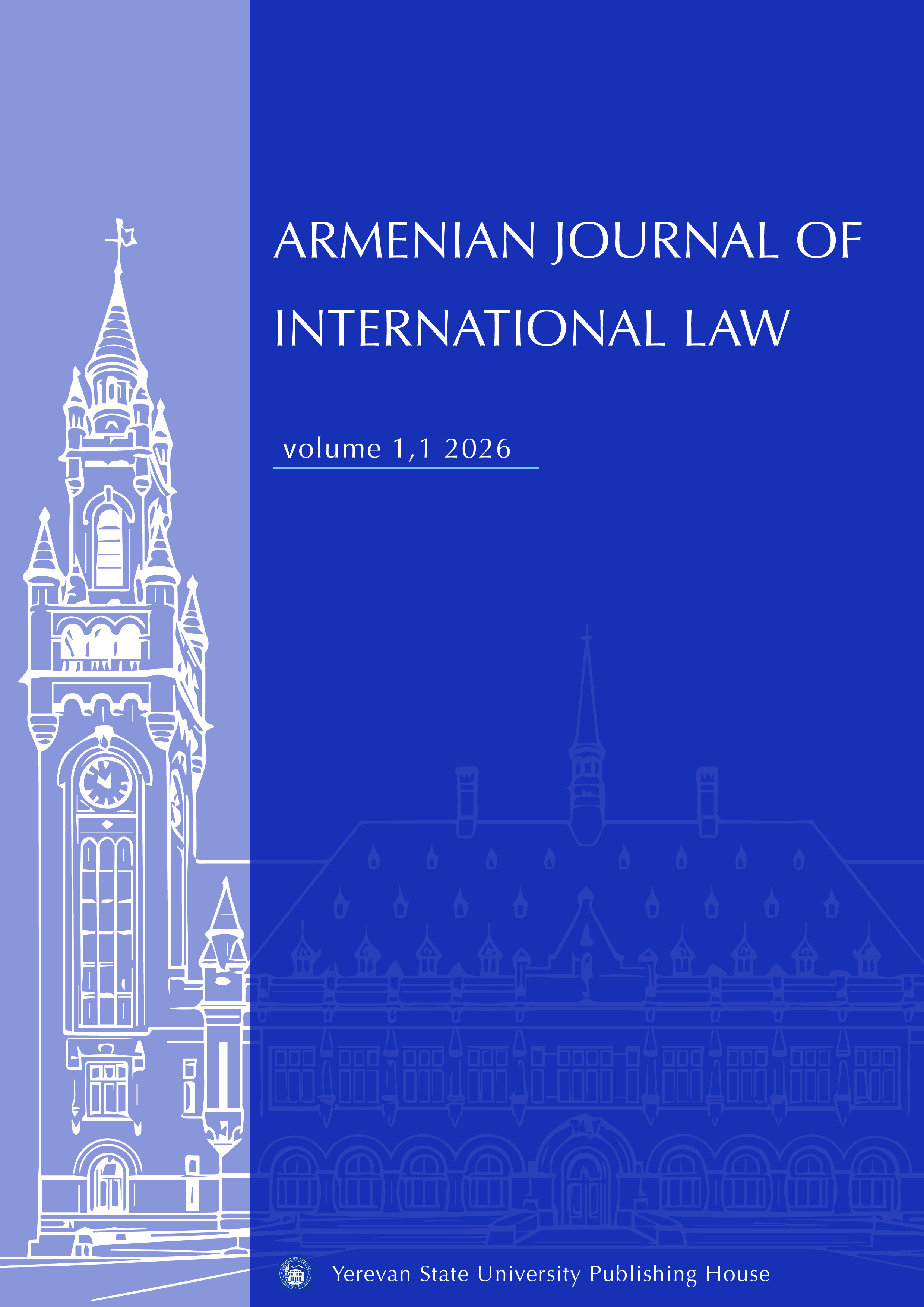
Armenian Journal of International Law
ArmJIL is a double-blind peer-reviewed scientific journal with a broad focus on international law. ArmJIL is published only in English. The Journal is published twice a year – one issue in summer, the second issue in late fall/early winter. In addition to the regular issues, special issues may be published per year.
ArmJIL is published under the auspices of YSU in cooperation with the Armenian Institute for International Legal Studies.
